Software Engineer · MSc Computer Science (Merit) · AI Researcher · Full-Stack Development · GestureKey · Sign Language Recognition Research · Open to Opportunities · Vision'97 Co-Founder · Python · Computer Vision · ML · Software Engineer · MSc Computer Science (Merit) · AI Researcher · Full-Stack Development · GestureKey · Sign Language Recognition Research · Open to Opportunities · Vision'97 Co-Founder · Python · Computer Vision · ML ·
Software Engineer · AI Researcher · MSc Computer Science
FrederickOpokuAfriyie
Full-StackAI & MLDataResearchOpen to Opportunities
Software engineer and AI researcher with an MSc in Computer Science (Merit, St Mary's University). I ship production full-stack systems, build machine-learning and computer-vision models, and run independent research through GestureKey. My Merit dissertation applied Random Forest and cross-validation across 47 international case studies. Currently Technology & Product Manager at The International Lens, and open to PhD and research positions as well as software engineering, data, and product roles.
Open to research, engineering, data, and product roles
RemoteOpen to RelocationResearch & PhDSoftware EngineeringData & AIProduct
I am a software engineer and AI researcher with an MSc in Computer Science (Merit, St Mary's University). My work spans full-stack web development, machine learning, computer vision, and original research, applied to real products and to rigorous analysis.
I designed and delivered complete web systems for clients and independently built and launched KraaFo, a live SaaS product, owning the full lifecycle: requirements, UX design, development, deployment, and maintenance. Alongside that I run GestureKey, an independent computer-vision sign language recognition project with accessibility at its core, and my Merit MSc dissertation applied Random Forest and a cross-validation framework across 47 international case studies.
I currently work as Technology & Product Manager at The International Lens, and I co-founded Vision’97, an independent streetwear brand shipping worldwide. I am open to PhD and research positions, and to software engineering, data, and product roles.
Lead the strategy, development, and optimisation of the organisation's digital ecosystem (website, mobile applications, and other digital products) for a seamless user experience, operational efficiency, and sustainable growth
Own the product lifecycle end to end: product strategy, system architecture, roadmap, delivery, and ongoing enhancement
Combine technical leadership with product management to drive digital transformation, grow audience engagement, and deliver data-informed solutions aligned to business objectives
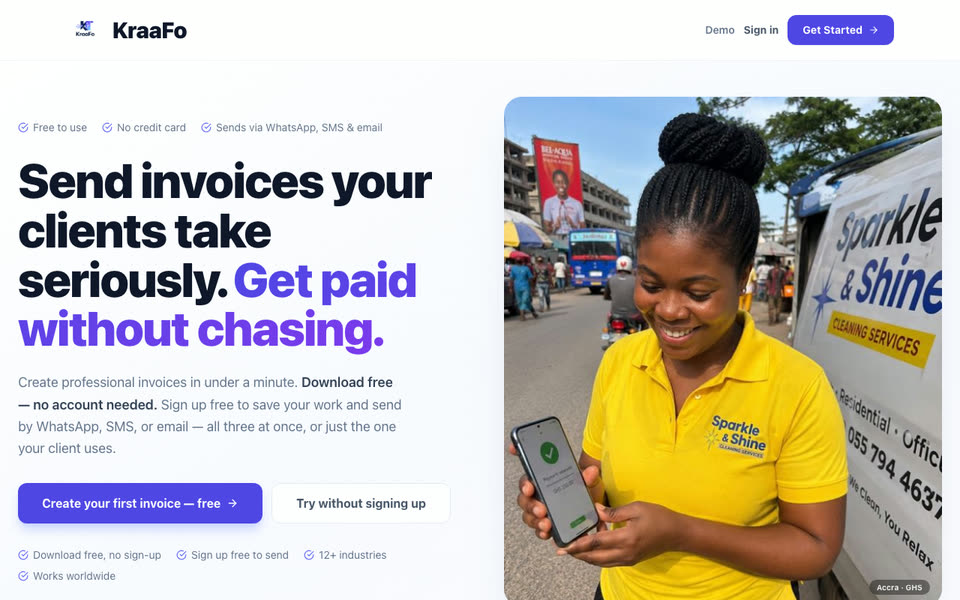
Designed, built, and launched KraaFo, a free SaaS platform enabling freelancers and service businesses to create professional invoices, receipts, and quotes in under a minute, with no account required
Engineered a full-stack system: React 18 + TypeScript frontend with Tailwind CSS and Vite, Node.js / Express backend, SQLite database, and server-side PDF generation via Puppeteer
Integrated AI-powered smart fill using the Groq API (Llama 3) with a Gemini fallback, and document import via Tesseract.js OCR, all processed on-server with no data retention
Shipped multi-currency support across 12+ industries, branded PDF exports, client address book, and email delivery via Nodemailer
2025 – PresentCurrent
Freelance Web Developer
Self-Employed, Remote
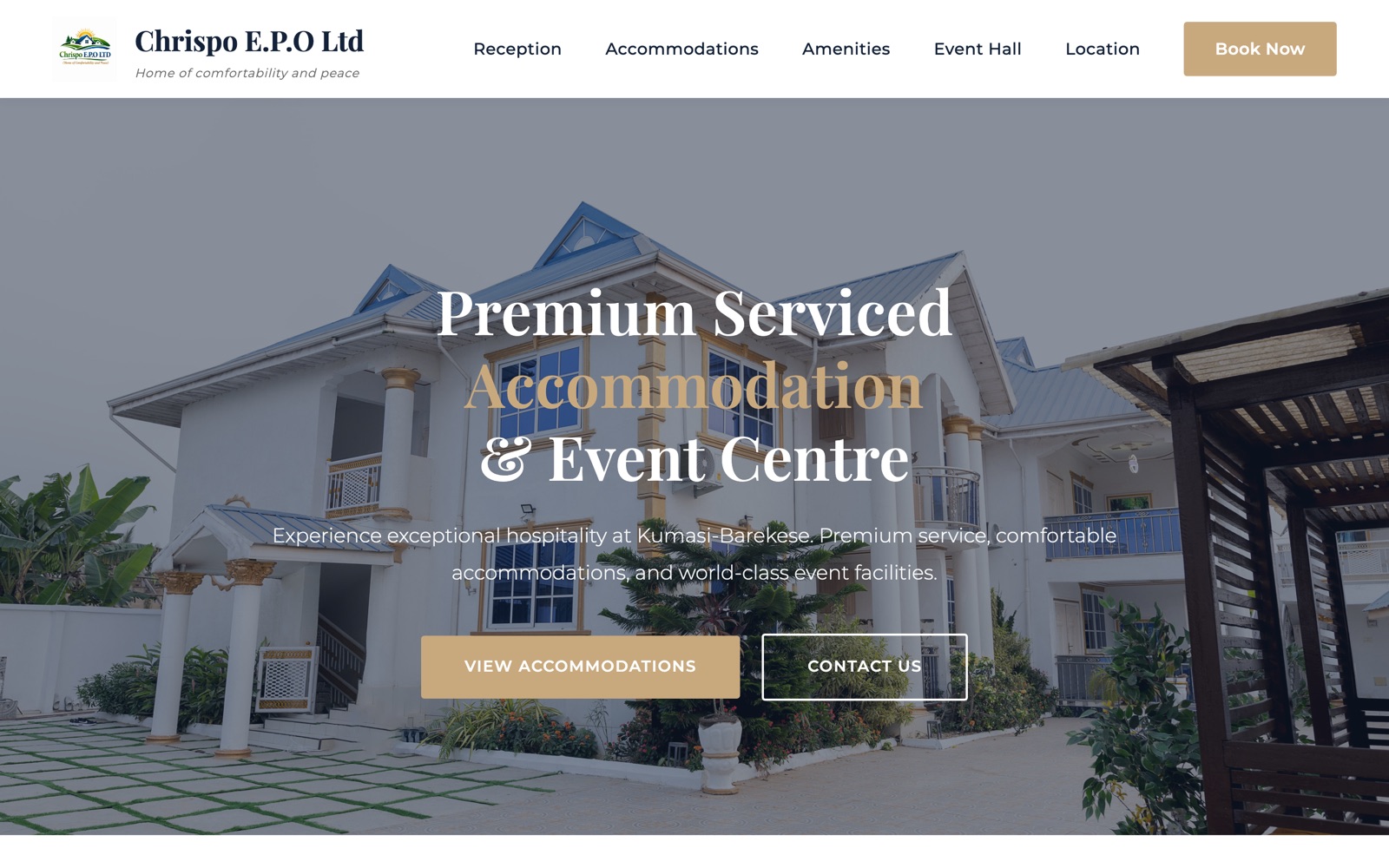
Designed and built complete full-stack web systems for commercial clients, a hotel (Chrispo E.P.O Ltd) and a cleaning company (Kleenx), from requirements through to live deployment
Delivered customer-facing booking and enquiry platforms alongside staff management backends with receipt generation and admin dashboards (live analytics, booking history, activity logs)
Managed the full project lifecycle: client requirements, UX design, development, deployment, domain configuration, and professional email setup
Oct 2025 – PresentCurrent
Sales Assistant
Children's World Fashion at Fenwick · Kingston, UK
Representing luxury brands including Kenzo, Hugo Boss, Timberland, and Michael Kors in a high-end retail environment
Delivering premium customer service and managing product displays in a fast-paced upmarket setting
Supporting daily sales operations and contributing to team performance targets
Co-founded and continue to operate an independent streetwear brand shipping worldwide
Lead all creative direction, graphic design, and UI/UX for the e-commerce platform, growing online presence by 40%
Developed scalable design workflows, reducing production turnaround by 15%
Sep 2024 – PresentVoluntary
IT Support Assistant
Staywell New Malden
Provide technical support to over 200 community members with detailed service tracking
Developed documentation and reports that improved service delivery efficiency by 15%
Nov 2023 – Nov 2024National Service
Business & Administrative Support
Innovate Solutions Limited, Ghana
Managed data records, coordinated documentation, and supported digital reporting and operational tracking
Contributed to information systems management in a fast-paced professional environment
Projects
Things I've built
LiveFull-Stack · Freelance
Chrispo E.P.O Ltd: Hotel Web System
End-to-end full-stack system for a hotel client. Built a customer-facing booking and enquiry platform, a staff backend for managing reservations and generating receipts, and an admin dashboard with live analytics, booking history, and activity tracking. Handled full deployment, domain setup, and professional email configuration.
ProblemThe client had no digital presence; bookings were handled by phone and paper, making it impossible to track availability, generate reports, or manage staff efficiently.
ApproachConducted requirements sessions with the client to map all operational workflows. Designed the data model first, then built a modular REST API, followed by the customer-facing UI and the staff dashboard in parallel.
ChallengeNeeded a live admin dashboard showing booking activity and revenue without a dedicated analytics service. Solved with lightweight aggregation queries on the backend, cached and polled from the frontend on an interval.
OutcomeFull system live and in active use. Staff can manage all bookings, generate PDF receipts, and view analytics from any device. Client email and domain fully configured.
LiveData · AnalyticsConsulting · Freelance
Chrispo E.P.O LTD: Real Estate & Pricing Analytics
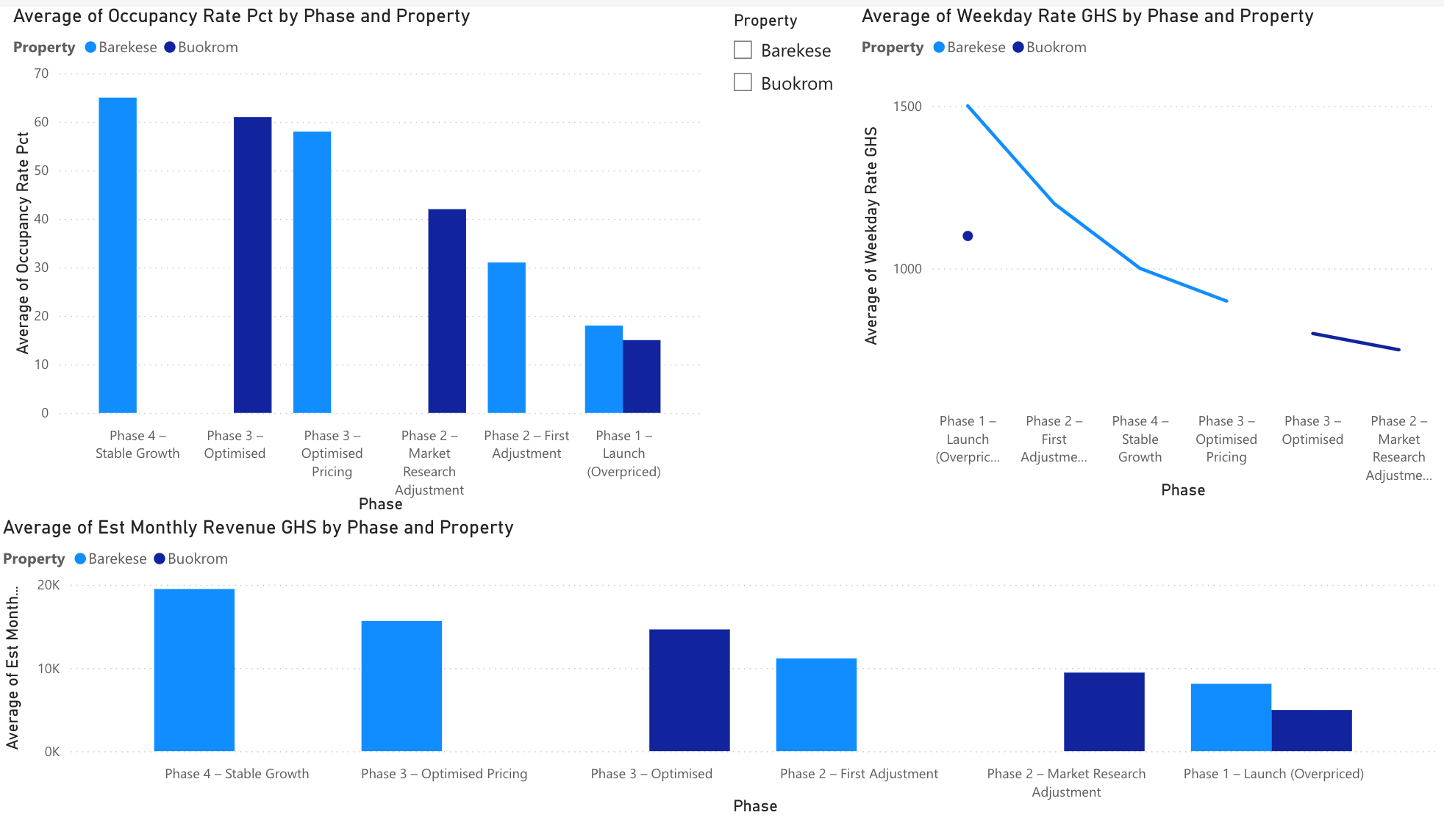
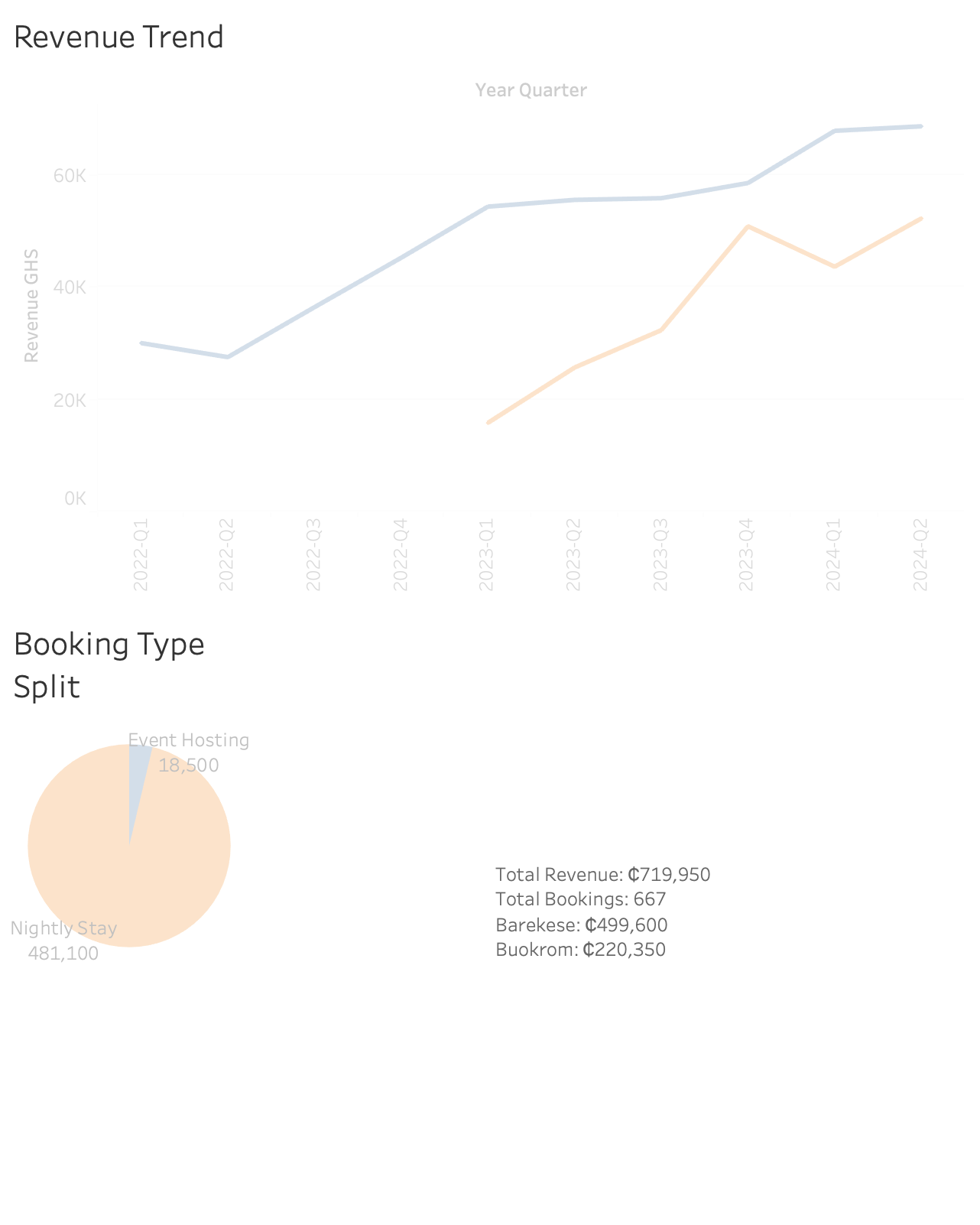
Consulting engagement with a Ghanaian property firm. Analysed booking patterns across two short-stay properties, identified overpricing as the root cause of low occupancy, and delivered a data-driven repricing strategy. After the change the client reported a substantial revenue increase, with Barekese occupancy rising from 18% to 58%. Built end-to-end: Python EDA → Excel workbook → Power BI & Tableau dashboards → live interactive Plotly Dash app deployed on Render.
ProblemTwo short-stay properties launched at prices too high for the Kumasi market: Barekese at 18% occupancy, Buokrom at 15%. The client had no data infrastructure to diagnose why bookings were low or what the right price point should be.
ApproachStructured three years of raw booking records into clean datasets and ran full EDA in Python (Pandas, Matplotlib, Seaborn) to identify occupancy trends by pricing phase. Benchmarked against the local Kumasi market, built a phase-by-phase repricing model, and delivered findings through Power BI for operations management and Tableau for executive and investor reporting.
OutcomeBarekese occupancy rose from 18% to 58% after repricing and Buokrom from 15% to 61%, and the client reported a corresponding revenue increase across the repriced properties. All four portfolio locations across Ashanti and Greater Accra were analysed and delivered in a live Plotly Dash app and a structured Excel workbook.
LiveFrontend · Freelance
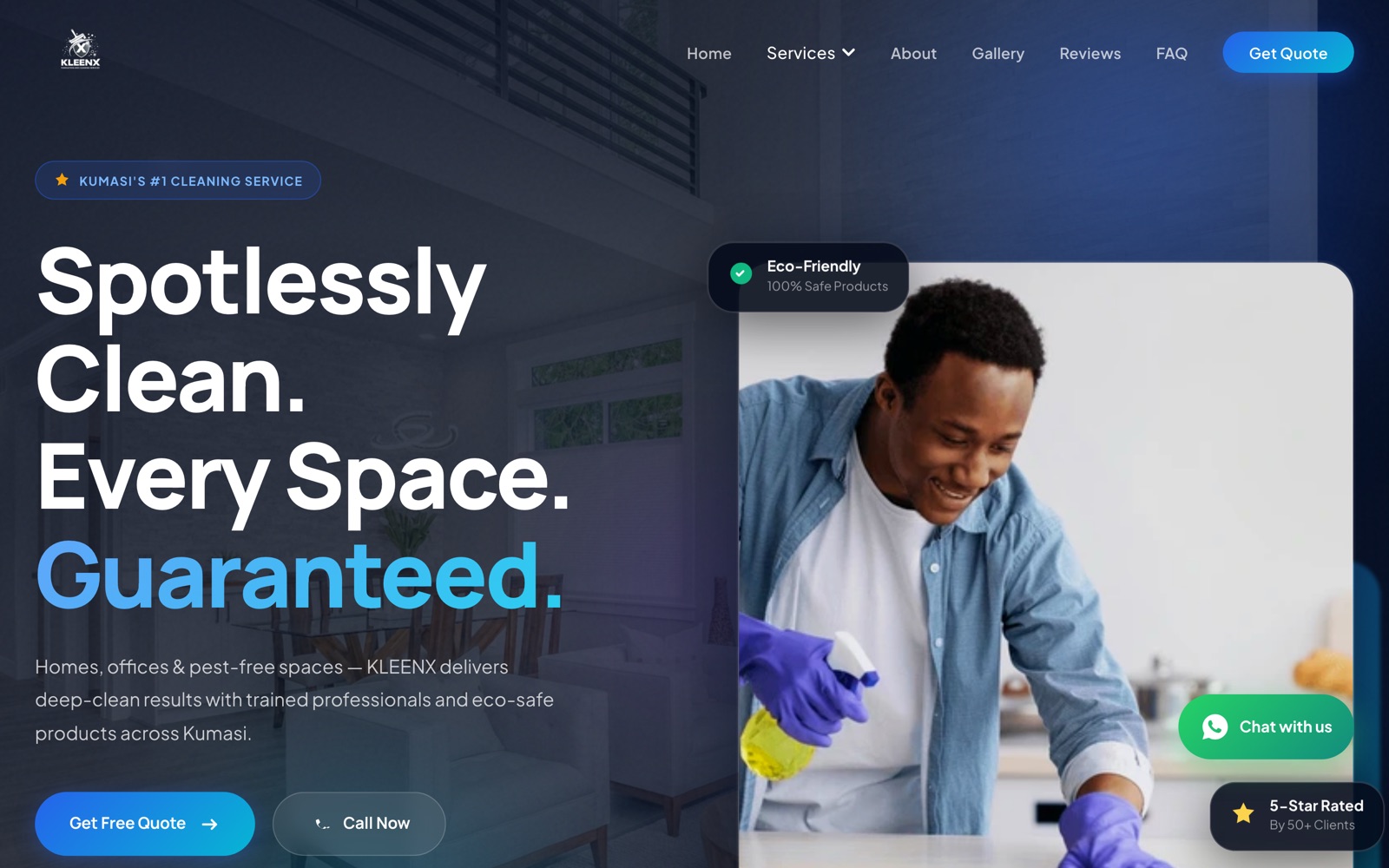
Kleenx Fumigation & Cleaning Services
Professional frontend for a cleaning and fumigation company. Built the full customer-facing site including service showcase, enquiry system, and mobile-responsive UX.
Free SaaS web app for freelancers and service businesses to create branded professional invoices, receipts, and quotes in under a minute, with no account required. Features AI-powered smart fill (Groq/Llama 3), live PDF previews via Puppeteer, OCR document import, email delivery, multi-currency support across 12+ industries, and a client address book.
Independent research project: a computer vision system classifying sign language gestures from image datasets. Applies preprocessing pipelines, ML models, and iterative evaluation, targeting real-world accessibility impact.
End-to-end AI-powered learning platform with 8 career tracks, a built-in AI tutor, career readiness scoring, gamification rewards, and a Pomodoro productivity timer, all designed to take users from zero to job-ready.
Sharp Service Delivery: Courier & Package Tracking
Real-world courier and package tracking web app with a live tracking timeline, multi-page site, admin dashboard, and dark mode. Built with React, Vite, and Tailwind CSS.
AI-powered tool that reads legal contracts and returns plain-English summaries, highlights risk clauses, and rewrites problematic sections, making legal documents accessible to anyone.
Official website for a UK & Ghana-based charity that provides wheelchairs, hearing aids, prosthetics, and adaptive equipment to people with disabilities across Africa. Full frontend with charity mission, impact stories, and donation pathways.
A Python + Pygame dark fantasy simulation: become a hunter, outwit the knights, collect the treasure. Three game modes, boss waves, and 25 unlockable achievements. Compiled to WebAssembly via Pygbag and playable in any browser, no install required.
Premium serviced accommodation and event centre in Kumasi-Barekese, Ghana. Full-stack system: customer-facing booking & enquiry platform, staff backend with receipt generation, and admin dashboard with live analytics.
Professional cleaning and fumigation company in Kumasi, Ghana. Built the complete customer-facing site: service showcase, enquiry system, gallery, testimonials, and mobile-responsive UX, live and driving real enquiries.
Free SaaS platform for freelancers and service businesses. Create branded invoices, receipts, and quotes in under a minute, with AI smart fill, live PDF previews, OCR import, email delivery, and multi-currency support across 12+ industries.
GestureKey is an independent AI research project building a computer vision system that classifies hand gestures in real time. The demo below runs entirely in your browser using MediaPipe Hands, so no data ever leaves your device.
GestureKey Demo
Computer Vision · On-Device
Works on mobile & desktop · Camera stays local
· fps
No hand detected
Show your palm to the camera
✋
Open Hand
All fingers extended
ModelMediaPipe Hands
Landmarks21 / hand
Gestures8 classes
ProcessingOn-device
Try these gestures
✋
✊
✌️
👍
☝️
🤙
🤘
👌
Video processed locally. Nothing is sent to any server.
Research
Research & Scholarship
Active Research · 2024 – PresentAI / Computer Vision / Accessibility
GestureKey: AI-Based Sign Language Recognition System
Status
In Progress
Domain
Computer Vision · NLP
Goal
Accessibility & Inclusion
Independent research project building a machine learning system to recognise and classify sign language gestures from image datasets. The system applies image preprocessing pipelines, feature extraction, and classification models trained on labelled gesture data, iterating on model accuracy and generalisation to work toward a real-world assistive tool for the deaf and hard-of-hearing community. Research combines computer vision techniques with accessibility-focused evaluation criteria.
PythonComputer Visionscikit-learnImage PreprocessingClassification ModelsModel EvaluationAccessibility Research
MSc Dissertation (Merit) · St Mary's University, 2025
Measuring the Impact of Digital Systems on Operational Efficiency in Residential Property Management: A Cross-Market Analysis
Institution
St Mary's University
Year
2025
Grade
Merit
Sample Size
47 case studies
Systematic analysis of 47 published case studies across North American, European, and Asia-Pacific residential property markets. Applied Random Forest modelling, regression analysis, and time series analysis alongside a cross-validation framework with uncertainty quantification to assess how digital systems affect operational efficiency across diverse organisational contexts.
Artificial Intelligence · Human-Computer Interaction · Software Design & Development · Web Application Development · Database Systems · Research Methods in Computing · Computer Networks
BSc Information Technology
University of Energy and Natural Resources, Ghana
2019 – 2023
Programming & Software Development · Database Systems · Data Structures & Algorithms · Information Systems · Computer Networks
Diploma in Information Technology
University of Energy and Natural Resources, Ghana
2019 – 2022
Google Data Analytics Professional Certificate, in progress via Coursera. Actively developing skills in R, advanced statistical analysis, and TypeScript.
GitHub portfolio: github.com/fredopoku
In Progress
Currently Building
What I'm working on now
Active Research · 2024 – Present
GestureKey: AI Sign Language Recognition System
Building a computer vision system that classifies sign language gestures from image data, with the goal of creating an accessible, real-world assistive tool for the deaf and hard-of-hearing community. Combining image preprocessing, feature extraction, and ML classification, iterating toward a system that generalises reliably across diverse gesture inputs.
Overall Progress55%
Problem definition & literature review
Dataset curation & preprocessing pipeline
Baseline classification model: initial training
Model evaluation, iteration & accuracy improvement
Real-time inference prototype
Accessibility evaluation & user testing
Ongoing · 2020 – Present
Vision'97 Streetwear
Co-founder and lead designer of an independent streetwear brand shipping worldwide. Continuously working on new collections, brand identity, and the e-commerce experience at vision97.vision.
Brand founded & launched
E-commerce platform live
New collection in development
Expanding international reach
In Progress
Google Data Analytics Certificate
Working through the Google Data Analytics Professional Certificate on Coursera, deepening skills in R, advanced statistical analysis, and structured data workflows to complement existing Python and ML expertise.
Frederick delivered exactly what we needed, a complete web system, built and deployed from scratch, that our whole team uses every day. Professional, reliable, and genuinely understood what we were trying to achieve.
Chrispo E.P.O LtdHotel · Freelance Client
“
Working with Frederick was seamless from start to finish. He built us a website that genuinely represents our brand: professional, clean, and it just works. Our enquiries have gone up since we launched and our clients tell us it looks great. We couldn't be happier.
Frederick's work on GestureKey genuinely surprised me: the fact that it runs in a browser with no setup, detects hand gestures in real time, and is entirely his own build says a lot about what he's capable of. He doesn't just talk about building things, he actually ships them.
AmoColleague · University Peer
“
What stands out about Frederick's work is the breadth: full-stack systems, data analytics, AI research. When he showed me the portfolio I was impressed by how practical and production-ready everything looked. Someone who can go from a client brief to a live system independently is exactly what the industry needs.
Open to PhD and research positions, software engineering, data, and product roles.
I'm interested in PhD and research opportunities in AI and computer vision, and equally in engineering, data, and product teams where I can build across the stack, work with data, or take a product from brief to delivery. I work remotely and I'm open to relocation. Research collaborations welcome too.
If something on this page caught your attention, reach out directly at opokufred32@gmail.com or connect on LinkedIn. References available on request.